
HOA Landscaping Rules in Florida and Texas: What Your Association Can and Cannot Require
HOA landscaping rules are one of the most common sources of friction between homeowners and their associations. Whether it is the height of your grass, the type of plants in your front yard, or whether you can replace a thirsty lawn with gravel and native species, your homeowners association likely has something to say about it. This guide explains how HOA landscaping rules work across the country, the basic guidelines that apply almost everywhere, and the specific protections homeowners have in Florida and Texas.
While the details vary from state to state and community to community, the underlying framework is remarkably similar nationwide. Understanding that framework first makes it much easier to know where you stand and what options you have.
Understanding HOA Landscaping Rules
HOA landscaping rules come from the association’s governing documents, primarily the declaration of covenants, conditions, and restrictions (CC&Rs) recorded against every lot in the community. When you buy a home in an HOA, you agree to be bound by these documents. They give the association the authority to set standards for how your property looks from the street and, in many cases, to enforce those standards with warnings, fines, and even liens.
Most landscaping rules exist for a stated purpose: maintaining a consistent community appearance, protecting property values, and preventing neglected yards from dragging down the neighborhood. Courts across the country have generally upheld an association’s right to enforce reasonable landscaping standards, as long as the rules are applied consistently and adopted through the proper process.
Common Types of HOA Landscaping Restrictions
Although every community is different, most HOA landscaping rules fall into a handful of familiar categories. Knowing these helps you spot what your association is most likely to regulate.
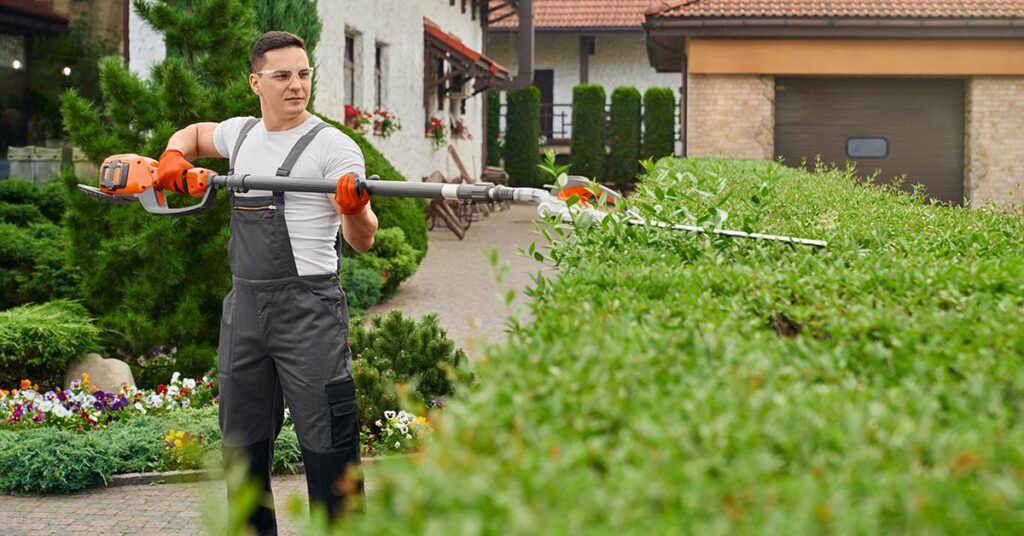
Lawn maintenance standards are the most common. These typically require you to keep grass mowed to a maximum height, control weeds, and prevent bare or dead patches. Plant and tree restrictions may dictate which species you can plant, how tall trees and hedges can grow, and whether you need approval before removing a mature tree. Hardscape and design rules govern features like rock gardens, gravel, mulch type and color, fencing, and decorative elements. Many associations also regulate irrigation and water features, artificial turf, vegetable gardens in front yards, and the placement of potted plants or yard art.
Most associations also require prior approval for significant landscaping changes. This usually means submitting a plan to an architectural review committee before you install new beds, remove a lawn, or make other visible changes. Skipping this step is one of the most common ways homeowners end up in a dispute.
Can an HOA Force You to Maintain Your Lawn?
In most cases, yes. If the governing documents require homeowners to maintain their lawns and landscaping to a certain standard, the association can enforce that requirement. Enforcement usually follows a predictable path: a written notice of the violation, an opportunity to correct it, and then escalating consequences such as fines if the problem is not fixed.
Some associations go a step further and reserve the right to enter your property to perform the maintenance themselves, then bill you for the cost. Whether this is allowed depends entirely on the language in your CC&Rs and on state law. The key point is that the association’s power comes from the governing documents, so the first thing any homeowner should do when facing a landscaping demand is read those documents carefully.
Basic Guidelines for Working Within Your HOA’s Landscaping Rules
No matter what state you live in, a few basic guidelines apply to nearly every HOA landscaping situation. Following them will keep you out of most disputes and put you in a stronger position if one arises.
Start by reading your governing documents before you plant, remove, or redesign anything. Submit a written request to the architectural review committee for any visible change and wait for written approval before you begin work. Keep copies of everything, including your application, the approval, and any correspondence. Take dated photos of your yard so you have a record of its condition. When you receive a violation notice, respond in writing and on time rather than ignoring it. Finally, check whether state law protects the specific type of landscaping you want, because several states limit what an HOA can prohibit, especially when it comes to water conservation.
That last point is where state law matters most. Florida and Texas both have statutes that protect certain water-conserving and drought-tolerant landscaping, even when an HOA would prefer a traditional green lawn. The sections below cover each state.
HOA Landscaping Rules in Florida
Florida law gives homeowners meaningful protection when it comes to water-friendly landscaping. Under Florida Statute 720.3075, an HOA’s governing documents cannot prohibit a homeowner from installing Florida-friendly landscaping. Florida-friendly landscaping is defined in Florida Statute 373.185 as landscaping designed to conserve water, protect the environment, and reduce the use of fertilizer and pesticides, using principles such as right plant in the right place, efficient watering, and the use of native and drought-tolerant species.
This does not mean a Florida homeowner can do whatever they want. The association can still adopt reasonable standards and require that landscaping be maintained in a neat and orderly condition. The protection is specifically aimed at preventing an HOA from forcing homeowners to maintain thirsty turf grass when a water-conserving alternative would serve the same purpose. If your Florida HOA tries to deny a Florida-friendly landscaping plan outright, that denial may conflict with state law.
Florida communities also have to contend with regional water management district restrictions, which can limit lawn watering to certain days and hours during dry periods. An HOA cannot require you to violate those water restrictions to keep your lawn green. You can review the statute directly at the Florida Statutes site for Section 720.3075.
HOA Landscaping Rules in Texas
Texas takes a similar approach to water conservation through Texas Property Code Chapter 202. Section 202.007 prohibits a property owners association from enforcing a restrictive covenant that bans drought-resistant landscaping or water-conserving natural turf. The same section also protects a homeowner’s right to install composting equipment, rain barrels and rainwater harvesting systems, and drip irrigation.
As in Florida, these protections come with limits. A Texas association can still require you to submit a detailed landscaping or design plan for approval, and it can adopt and enforce reasonable standards for the type, appearance, and installation of drought-resistant landscaping so long as those standards do not effectively prohibit it. In practice, this means a Texas homeowner who wants to xeriscape should submit a clear plan that shows the design meets the community’s aesthetic standards, rather than simply tearing out the lawn and replacing it with gravel.
Texas’s recurring droughts and water restrictions make these protections especially important. An association cannot reasonably demand a lush lawn when local watering restrictions make that impossible to maintain. You can read the statute directly at the Texas Property Code Chapter 202 on the Texas Legislature’s website.
How to Resolve HOA Landscaping Disputes
If you find yourself in a dispute over landscaping, escalate carefully and keep everything in writing. Start by requesting a copy of the specific rule the association says you violated, along with the section of the governing documents that authorizes it. Many disputes dissolve once it becomes clear the rule is not actually in the CC&Rs or is being applied inconsistently.
If the disagreement continues, ask to address the board at a meeting or request mediation, which both Florida and Texas encourage as an alternative to litigation. Document every communication and keep your account current; withholding dues to protest a landscaping rule usually backfires and can expose you to additional penalties.
When a dispute cannot be resolved on your own, it is worth talking to an attorney who handles HOA matters in your state. You can search for qualified lawyers through HOALawFinder’s attorney directory, which lists attorneys who handle homeowner association issues in Florida, Texas, and beyond.
Got fined and need help now?
Search Florida HOA Attorneys →Frequently Asked Questions About HOA Landscaping Rules in Florida and Texas
Yes, within limits. An HOA can regulate plant types, lawn height, and overall appearance through its governing documents, and it can require approval before you make visible changes. However, both Florida and Texas have laws that stop an HOA from outright banning water-conserving and drought-resistant landscaping.
Generally an HOA can require you to maintain your yard, but it cannot force you to keep thirsty turf grass if you want water-conserving landscaping. Florida Statute 720.3075 protects Florida-friendly landscaping, and Texas Property Code Section 202.007 protects drought-resistant landscaping and water-conserving natural turf. The HOA can still require a plan and set reasonable standards.
Yes. If your governing documents set maintenance standards, the HOA can issue a violation notice and impose fines if you do not correct the problem after notice and an opportunity to cure. The exact process and fine limits depend on your state and your CC&Rs.
Texas Property Code Section 202.007 prevents an HOA from banning drought-resistant landscaping, water-conserving turf, rainwater harvesting, composting, and drip irrigation. The association can require you to submit a design plan for approval and can enforce reasonable aesthetic standards, but it cannot prohibit xeriscaping altogether.
Ask for the specific rule and the section of the governing documents that authorizes it, keep all communication in writing, and request to address the board or use mediation. Keep your dues current while the dispute is pending. If it cannot be resolved, consult an attorney who handles HOA matters in your state.